Diploid
-A cell or an organism consisting of two sets of chromosomes
-one set from the mother and another set from the father
-Somatic cells (body cells) are diploid
-In humans, the diploid number is 46 (23 from mom, 23 from dad)
-Symbolized as 2n
Haploid
-A cell or organism consisting of one set of chromosomes (half)
-Gametes (sex cells) are haploid
-In humans, the haploid number is 23 (egg=23, sperm=23)
-Symbolized as n
Meiosis
-cell division of the gametes
-halves the number of chromosomes
-occurs in all sexually reproducing organisms
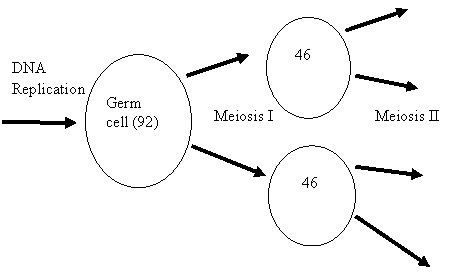
-there are two stages of meiosis (two divisions); meiosis I and meiosis II
-Meiosis in males: spermatogenesis
-Meiosis in females: oogenesis
 -begins
with a germ cell which contains 46 chromosomes
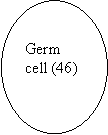
-begins
with a germ cell which contains 46 chromosomes
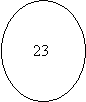
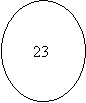
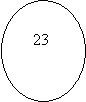
23
-ends with 4 gametes which contain 23 chromosomes
Homologous Chromosomes
-chromosomes that are paired during meiosis
-they consist of four chromatids total
-One pair is inherited from an individual’s father, the other pair is inherited from the mother
-identical in shape and size, and gene location
-only present during meiosis
-during meiosis they swap genes (cross over) in order to diversity gametes
Drawing:
Crossing Over
-a process in which homologous chromosomes exchange genes
-important for genetic variation (if not for crossing over, all of an individual’s gametes may be identical)
-occurs during Prophase I