Name
___________________________
Cell
Cycle- Science Skills
The cell cycle is a repeating cycle of
cellular growth and division- it occurs during the entire life of an organism,
from birth until death. The cell cycle is typically a four-phase process
followed by cytokinesis. An individual cell spends about 90% of its
time in the first three phases of the cycle, which collectively is called interphase. A cell will enter the last phase of the cell
cycle only if it is about to divide.
The
phases of mitosis are as follows:
First growth phase (G1): During this
phase the cell grows rapidly and carries on routine functions. For most
organisms, this phase occupies the major portion of a cell’s life.
Synthesis phase (S): A cell’s DNA is
replicated (copied) during this phase. The DNA transforms from chromatin (one
copy; shapeless) to sister chromatids (two copies; “X”
shaped).
Second growth phase (G2): In the G2
phase, preparations are made for the nucleus to divide (mitosis). Cell
organelles, such as mitochondria, replicate to prepare for two cells. Hollow protein
fibers called microtubules are assembled. Microtubules are used to help move
chromosomes during cell division.
Mitosis + Cytokinesis:
The process of one nucleus dividing into two nuclei is known as mitosis. Each
nucleus ends up with an equal amount of chromosomes. The process of the cytoplasm
dividing is known as cytokinesis.
1.
How
are mitosis and cytokinesis alike? How are they
different?
_______________________________________________________________________________________________________________________________________________________________________________________.
2.
A
cell under a microscope appears to be in the fourth phase of the cell cycle.
What does this indicate about the cell? _____________________________
____________________________________________________________.
Match
each statement with the phase in the cell cycle it describes. Write the letter
of the correct phase in the space. You will use the terms more than once for
some choices.
3.
_____
nucleus divides.
4.
_____most
of the cell’s life is during
this phase
5.
_____cytoplasm
divides
6.
_____
the mitochondria replicate
7.
_____cell
grows rapidly
8.
____two
identical nuclei are created
9.
_____
DNA is copied
10. _____microtubules are assembled
11. _____sister chromatids
are formed
12. _____cell carries out routine
functions
13. _____ microtubules move chromosomes
14. Choose the phrase that best completes
the analogy:
G2 phase is to
mitochondria as S phase is to ________________
a.
Choromatids
b.
Centromere
c.
Microtubules
d.
DNA
1. Match
the parts of the cell cycle with the following terms by writing each letter
next to its corresponding number.

PHASES OF THE
CELL CYCLE
a.
Prophase e. Synthesis phase
b.
G1 f. G2
c.
Telophase g. anaphase
d.
Metaphase
Shade
the pieces of the cell cycle that are part of interphase
YELLOW.
Shade
the pieces of the cell cycle that are part of the mitotic phase RED.
Cytokinesis
is not reflected on the cell cycle above. Figure out when cytokinesis
occurs and draw two small circles to mark when it would take place during the cell
cycle.
2. Write
the names of each stage of mitosis that is represented below each cell:
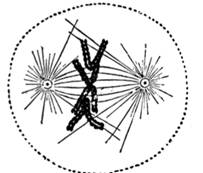

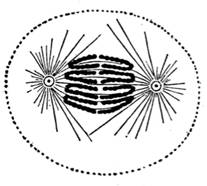

___________________ _______________________ ______________________ ________________________
3. Write
the 4 phases of mitosis in order:
4.
___________________,
5.
___________________,
6.
___________________,
7.
___________________.