Description
The cell division inquiry based science journal is an easy way for students to get engaged in the content using inquiry and models!
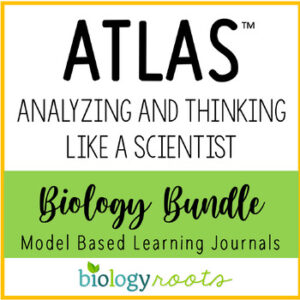
This inquiry journal (I call it ATLAS: Analyzing and Thinking Like a Scientist) was developed to emphasize real world science without route memorization, making it easy to incorporate modern biology frameworks such as NGSS.
How to use the Cell Division Inquiry Journal:
First, read the teacher guide so that you know what is expected of the students, as well as any materials you may need. You know your students best; after reviewing the teacher guide you may decide to skip certain activities in the inquiry journal, and instead save them for teacher instruction.
Secondly, print the inquiry journal for your students to begin the inquiry based learning!
The inquiry journal comes in an easy Journal format for students to use as they explore the topics.
This typically takes 3 days to complete (if you use every activity) and is designed so that students build and explore models in “layers” before teacher instruction. LAYERS OF THE INQUIRY JOURNAL:
- Inquire (Big Idea)
- Engage (Build It)
- Explore (MAPS: Modeling, Analyzing/Applying, Predicting, and more).
Once the inquiry journal is complete, move on to teacher-lead instruction: explain (this material is not included).
CELL DIVISION INQUIRY JOURNAL OUTLINE:
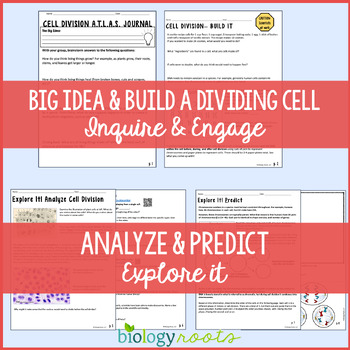
Students inquire about the “Big Idea”: Cells division is used for growth, repair, reproduction. Chromosome numbers must be maintained in a species. Cell cycles must be regulated or it can lead to cancer.
MAPS are the Exploratory portion of the journal. Included are the following:
1. Cell Division Model: Students try to recreate the number of chromosomes in a fruit fly cell during division.
2. Analyze Cell Division: Students analyze slides of cells to look at the different nuclei; computers are used to look at newt development and HeLa.
3. Predict: Students predict the number of chromosomes in cells as they divide; and try to put cells in order of mitosis (again there are no wrong answers in the inquiry journals!)
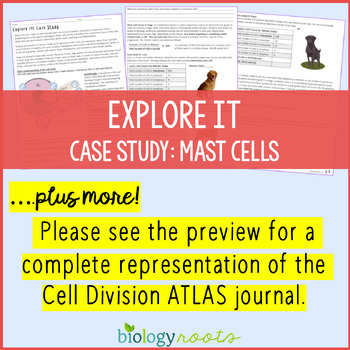
4. Case Study: Students explore the cell cycle more deeply and determine the mitotic index for dogs that may have mast cell tumors.
Meiosis Extension: A separate meiosis inquiry journal is not included, however there is a 2 page extension activity for inquiry based learning that explores chromosome numbers, and fraternal twins.
Suggested Materials: paper plates, yarn, student devices/computers
FAQ:
1. Will this work with my current cell division teaching materials?
- Absolutely! This is an easy way to incorporate modern science frameworks into any classroom, and will work with any existing cell division materials. Simply give it to your students before you teach your typical unit.
2. What do I need to use the inquiry journal?
- Chromebooks or student devices are used for a small portion of the inquiry journals. Additional materials, such as lab supplies, are found at bottom of every preview. These materials support the hands-on activities, but can be modified.
3. Is the inquiry journal a complete unit? Does this replace my teaching unit?
- No, the inquiry journal is a 7-10 page journal that takes approximately 3 classes to complete. It is designed for your students to complete before teacher-lead instruction. The teacher-lead unit materials are not included, but you can use the inquiry journals with whatever teaching materials you currently use.
4. Will my students be more prepared for the topic I teach after using the inquiry journal?
- Yes, it is tried and true inquiry based learning, which studies have shown result in greater retention and understanding of the phenomena.